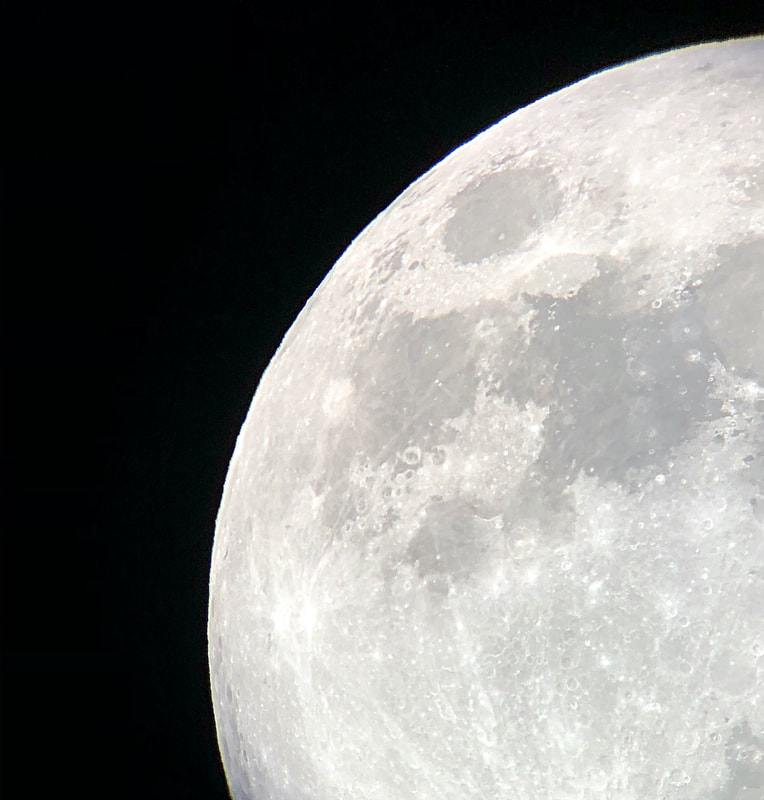
Look - no chromatic aberration to be seen.
Once again, the sky was clear and the seeing better than terrible last night, so out I stepped onto my rooftop. With a curfew on from 7 PM - what a strange and distressing time this is - I couldn't go outside. Luckily, there were very few people on the rooftop, and no helicopters hovering low in the sky.
The Moon was three-quarters full, and with no planets in the sky and transparency quite low, it would be my focus once again. I really wanted to see if I could make out more chromatic aberration tonight through the FC-100DC; the view a couple nights back had made me reconsider the focal extender I'd bought for the telescope.
The Moon was three-quarters full, and with no planets in the sky and transparency quite low, it would be my focus once again. I really wanted to see if I could make out more chromatic aberration tonight through the FC-100DC; the view a couple nights back had made me reconsider the focal extender I'd bought for the telescope.
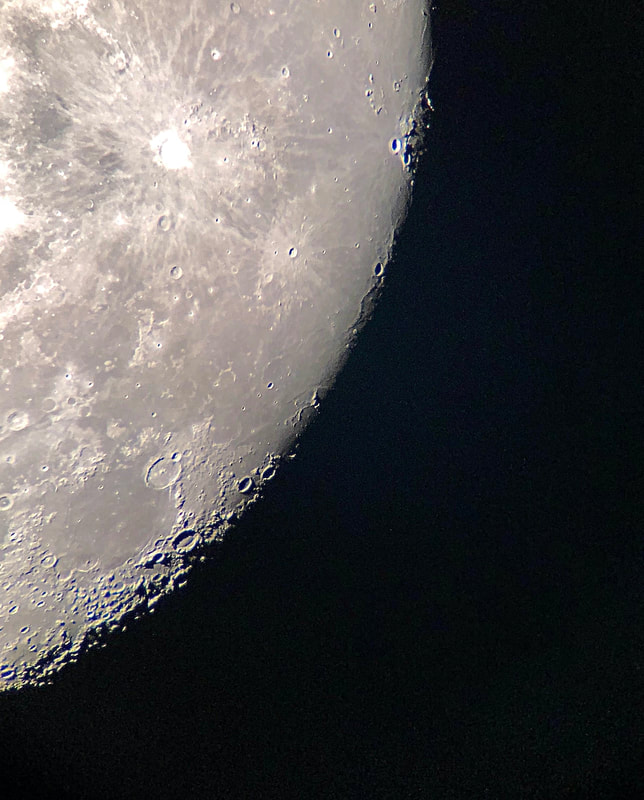
A look at Gassendi, my favorite lunar crater, and its surroundings.
A band of ragged clouds obscured the Moon as I stepped outside, but they passed within a few minutes. When the Moon emerged, I noticed no - and I mean no - chromatic aberration at all, not even on the lunar limb. The seeing was, by then, pretty unsteady, but I did manage to get some spectacular views of the crater Gassendi at around 200x. Nineteenth-century Selenographers imagined that the crater's central mountains changed in shape, betraying - they thought - signs of volcanism or perhaps even life on the lunar surface. It's been a joy for me to learn a great deal about the Moon's cultural and scientific history as I work on my next book. It gives added depth to these nights of lunar exploration.
Last year, Takahashi debuted a seeming upgrade over the 100DC: the 100DZ, a telescope with better color correction and even fewer lens aberrations. Observers report that, visually, there is not much difference between the DC and DZ - certainly not on most nights - but still, in this hobby you always want what is just out of reach. A telescope that promises to show you ever so slightly more, even once in a blue Moon, can be extremely tempting.
However, last night clinched it: I'll keep the DC for now. The DZ is about a third heavier, and there is just something about having such a lightweight, easy-to-mount refractor that still shows so much. And now, with the extender, it's almost as though I have two telescopes in one, both just about perfect for different roles, and one that, apparently, shows absolutely no false color in my usual observing locations.
Last year, Takahashi debuted a seeming upgrade over the 100DC: the 100DZ, a telescope with better color correction and even fewer lens aberrations. Observers report that, visually, there is not much difference between the DC and DZ - certainly not on most nights - but still, in this hobby you always want what is just out of reach. A telescope that promises to show you ever so slightly more, even once in a blue Moon, can be extremely tempting.
However, last night clinched it: I'll keep the DC for now. The DZ is about a third heavier, and there is just something about having such a lightweight, easy-to-mount refractor that still shows so much. And now, with the extender, it's almost as though I have two telescopes in one, both just about perfect for different roles, and one that, apparently, shows absolutely no false color in my usual observing locations.
Notes from readers