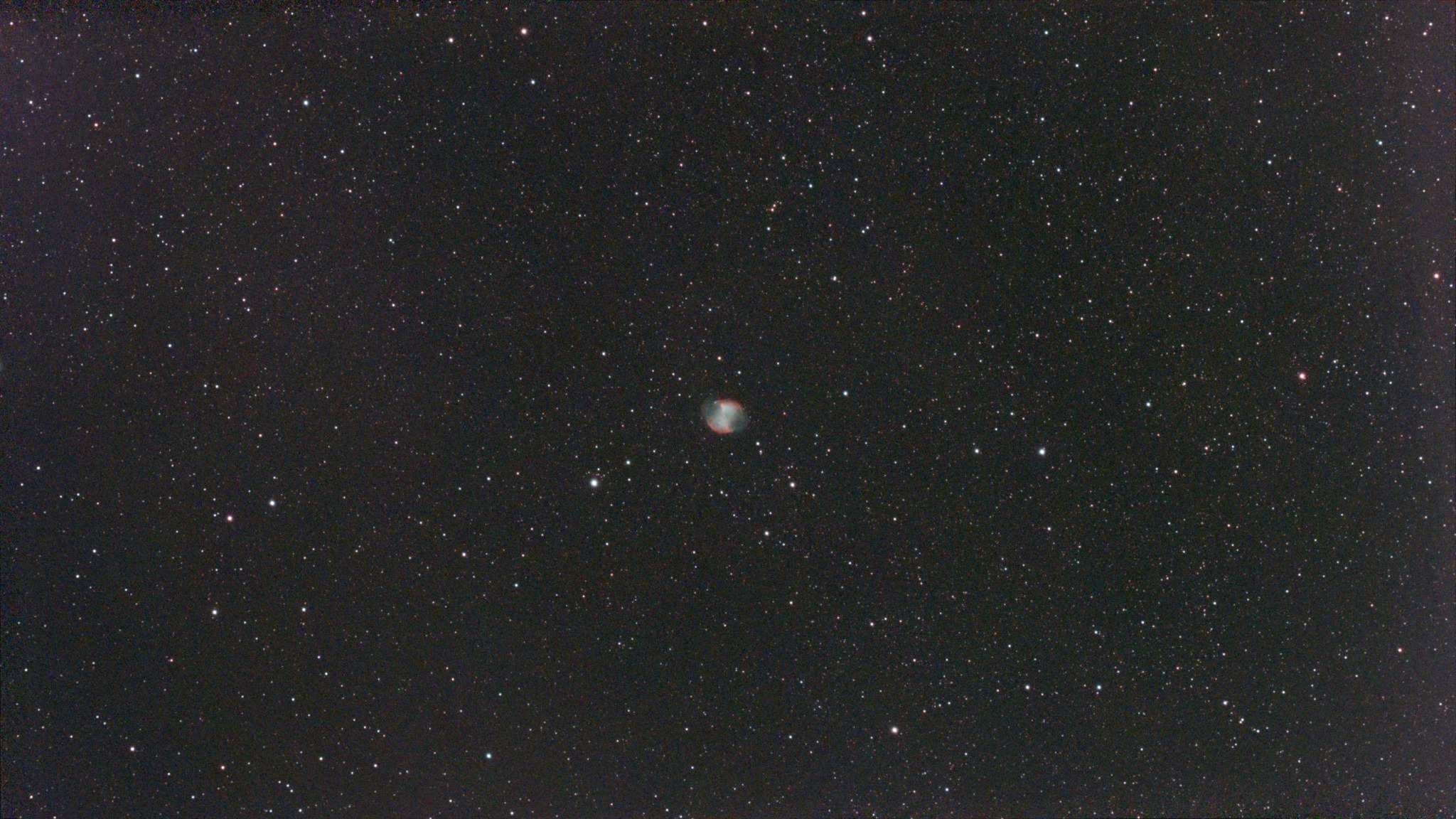
A 20-minute exposure of the Dumbbell Nebula, taken with the S30 Pro.
Observing conditions in Washington, DC have been largely disappointing since last winter. Every time I stepped out with my Takahashi refractors, setting up with great anticipation in a knot of bushes near my backyard, the night air seemed welcoming enough. But when I peered through the eyepiece, the view of, say, Jupiter was often underwhelming. The belts and zones of the planet lacked contrast, as though hidden behind a milky film.
But recently, I accompanied my family for our annual trip to Manitoba, Canada. I brought both my Takahashi FC-76DCU refractor and a new telescope: a ZWO Seestar S30 Pro. It works just like the other “smart” telescopes I’ve described on these pages: by repeatedly taking pictures of celestial objects and then combining, or “stacking” them, one after another. The stacking makes the aggregate image brighter and more detailed. It’s like real-time astrophotography.
As luck would have it, the clouds parted during my first night in Winnipeg. I installed the Seestar’s software, set up the little telescope on the patio, and pointed it at M27, the Dumbbell Nebula.
Two things immediately impressed me.
First, the dimensions and texture of the telescope. With an aperture of just 30mm and a compact, foldable tripod, the S30 is a fraction of the size of Unistellar’s EVScope variants. It also feels much more robust and easy to handle than the sleek but seemingly fragile Vaonis Vespera iterations. In that sense, the Seestar reminds me of the Dwarflab Dwarf 3 that I tried out last year. Both telescopes feel like they’re made to be stuffed in a backpack and handled in the dark.
Second, the Seestar’s software is both powerful and easy to use. Every smart telescope I’ve tried comes with user-friendly software, but the app accompanying the Seestar feels especially intuitive – and it appears to come with more image-editing tools than other smartscope apps.
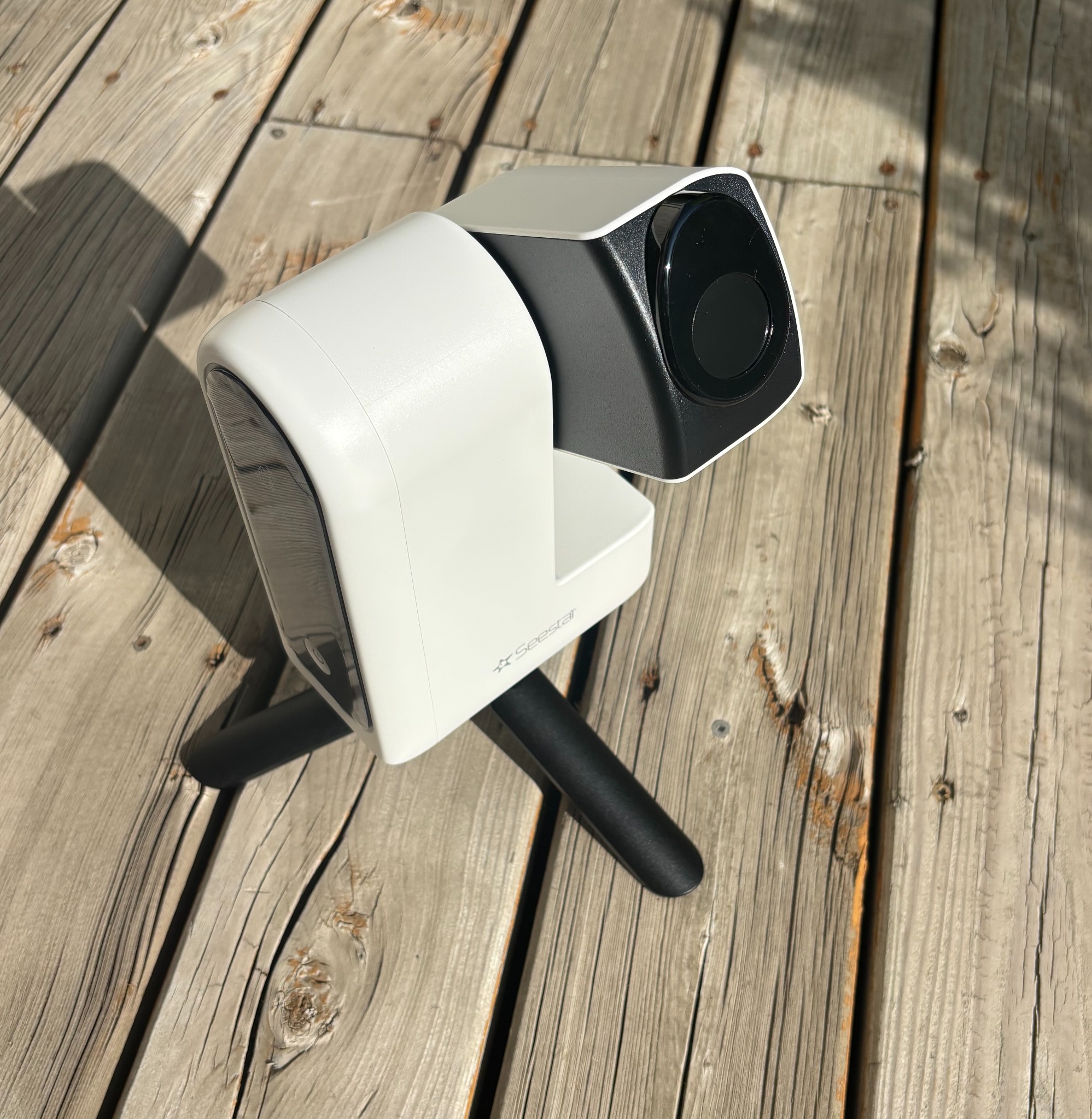
The Seestar S30 Pro is one capable little scope.
It didn’t take me long to get the Seestar pointed at the Dumbell Nebula. But at first the image of the nebula was fainter than what I was used to from my experience with the EVScope or Vespera. The reason, of course, is that – at just 30mm – the Seestar takes longer to gather light.
After about 20 minutes, the clouds were beginning to move in, and I had to pack up. I was happy to see that the Seestar had taken a competent image of the nebula, and its software allowed me to enhance that image with just one tap of my phone.
How does the image compare to what I might have obtained in 20 minutes with a rival smart telescope?
Well, I think it’s much sharper than the image a Unistellar telescope would have provided. The EVScope 2 does come with an eyepiece, and that actually makes a big difference. The eyepiece gives me the feeling that I’m actually observing with my eyes, rather than coordinating observations with my smartphone.
Still, the EVScope variants cost several times more than the Seestar.
The new Vespera telescopes would have provided a better image, but I don’t think they would have been quite as easy to use. And again: the cost of the Vespera is much higher than that of the Seestar.
The closest comparison to the Seestar with the Dwarf. The new Dwarf telescopes might have given me a comparable image of the Dumbbell Nebula, but I don’t think I would have been able to enhance that image quite as easily. Again, I prefer the Seestar’s software – though the Dwarf app is no slouch.
Anyway, a couple nights later the sky was again clear. Atmospheric seeing and transparency were both about average.
This time, I set up the Seestar next to my Takahashi FC76. I have a Twilight I mount in Winnipeg, and that turns out to be a nice match for the Takahashi. The little scope is absolutely solid on the mount, and the slow-motion controls make it a pleasure to use.
I decided to point the Seestar at large, diffuse objects – nebulae and galaxies – while using the refractor to enjoy smaller, brighter sights: planets and stars. I quickly had the Seestar imaging the pinwheel galaxy, which is too dim to see with a small, traditional refractor under an urban sky. As it turned out that there were no planets in the sky, I resolved to use the FC76 to track down some double stars I hadn’t observed in a while.
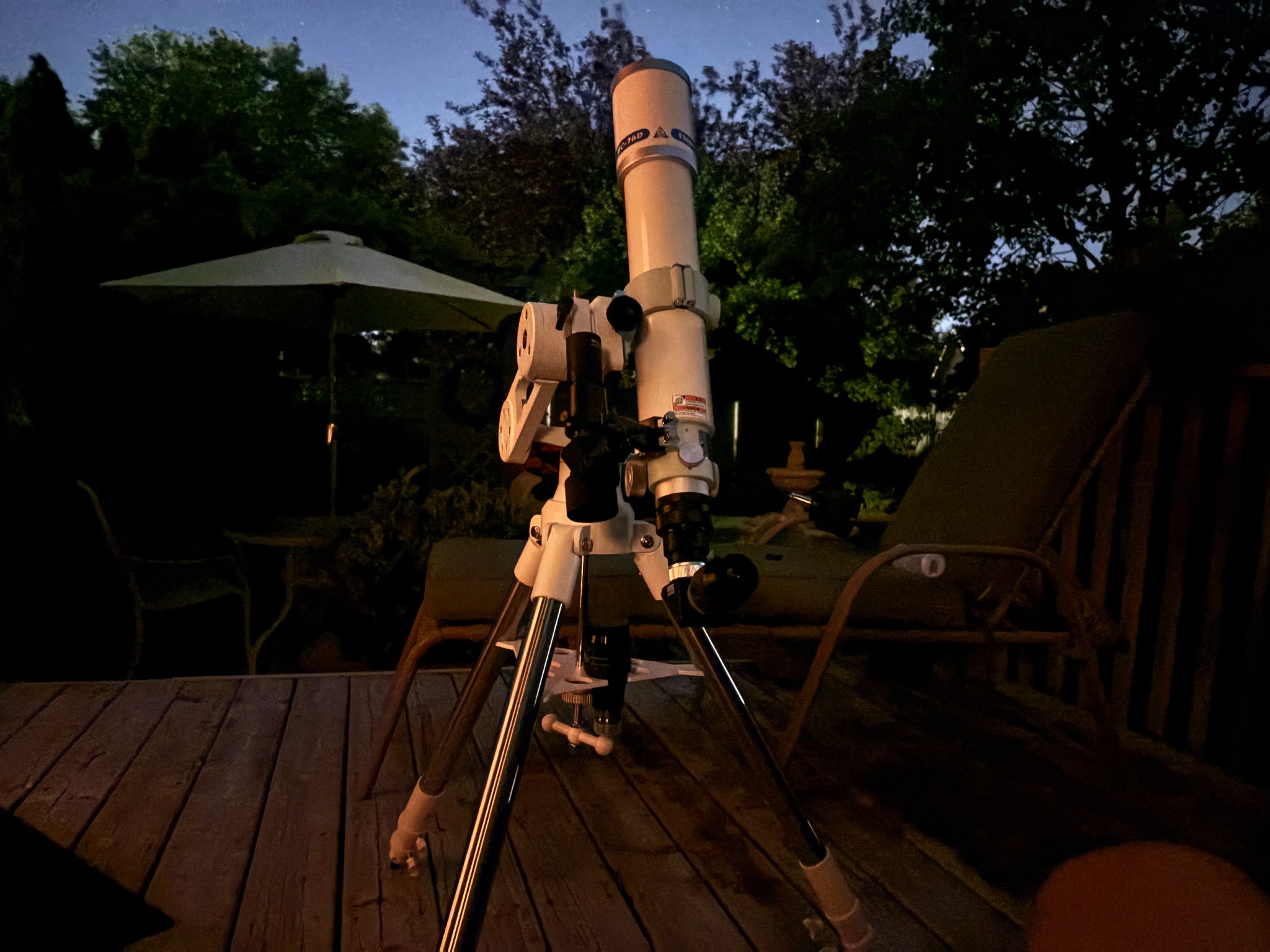
The Takahashi FC76 DCU on a Twilight 1 mount and tripod. A near-perfect combination.
I had to begin with Albireo: a bright, golden star near a dimmer, blue companion. It’s widely regarded as the most beautiful double star in the sky.
It’s not known for sure whether these stars actually orbit one another, or whether they’re instead an “optical double:” a pair of stars that only seem related. If the stars are gravitationally bound, they must be distant from one another, and their “orbital period” – the amount of time it takes for them to orbit each other – is at least 100,000 years.
A planet could therefore safely orbit one of these stars without being dislodged by the other. And an observer on that planet wouldn’t see a double sunset, like Luke did on Tatooine. In some seasons they would, however, see a wonderfully bright yellow or blue star in the night sky.
The view of Albireo through the FC76 was very satisfying. The stars were perfect pinpoints: gems against a velvet background, as the astronomers’ cliché goes. The small aperture of the 76, however, mutes that spellbinding color contrast, just a bit. I know that the view through a bigger refractor would have been even more impressive – but there’s no way I could have taken such a telescope on a road trip from DC to Winnipeg.
When I’d admired Albireo for a little over 20 minutes, I turned my attention to the Seestar. The ghostly spiral arms of the pinwheel galaxy were now clearly visible in the app, but they remained dim. And once again, clouds were moving in.
I packed up both telescopes in a matter of minutes, wishing I’d had more time, then enhanced my image of the pinwheel galaxy. Now, those spiral arms looked much brighter. I continued to tinker with the image on the following day, until the galaxy really looked quite impressive.
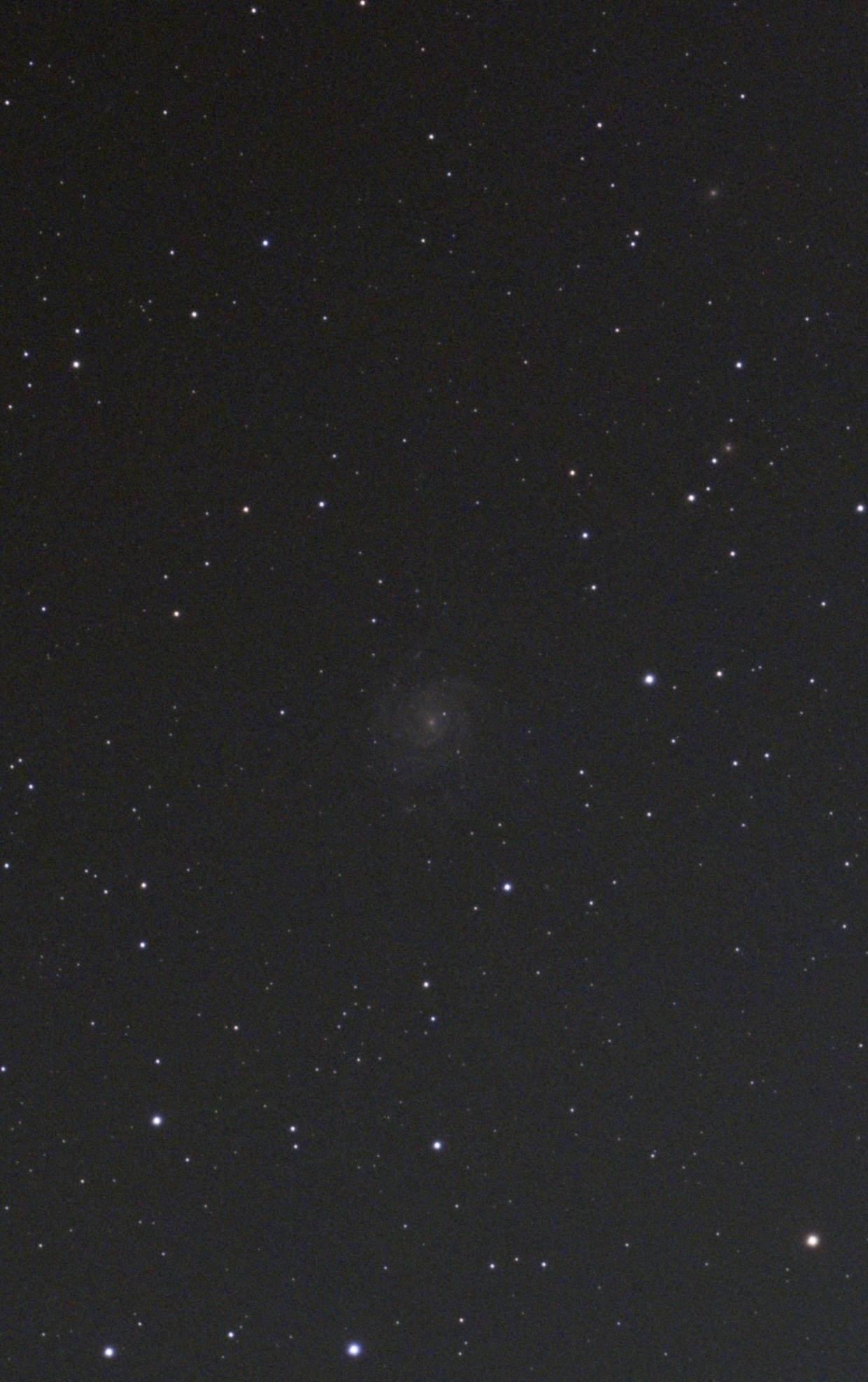
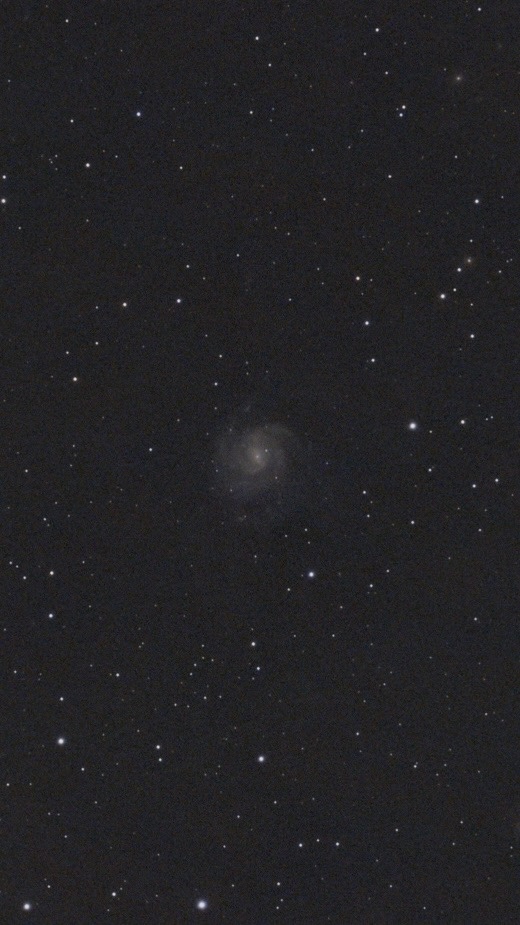
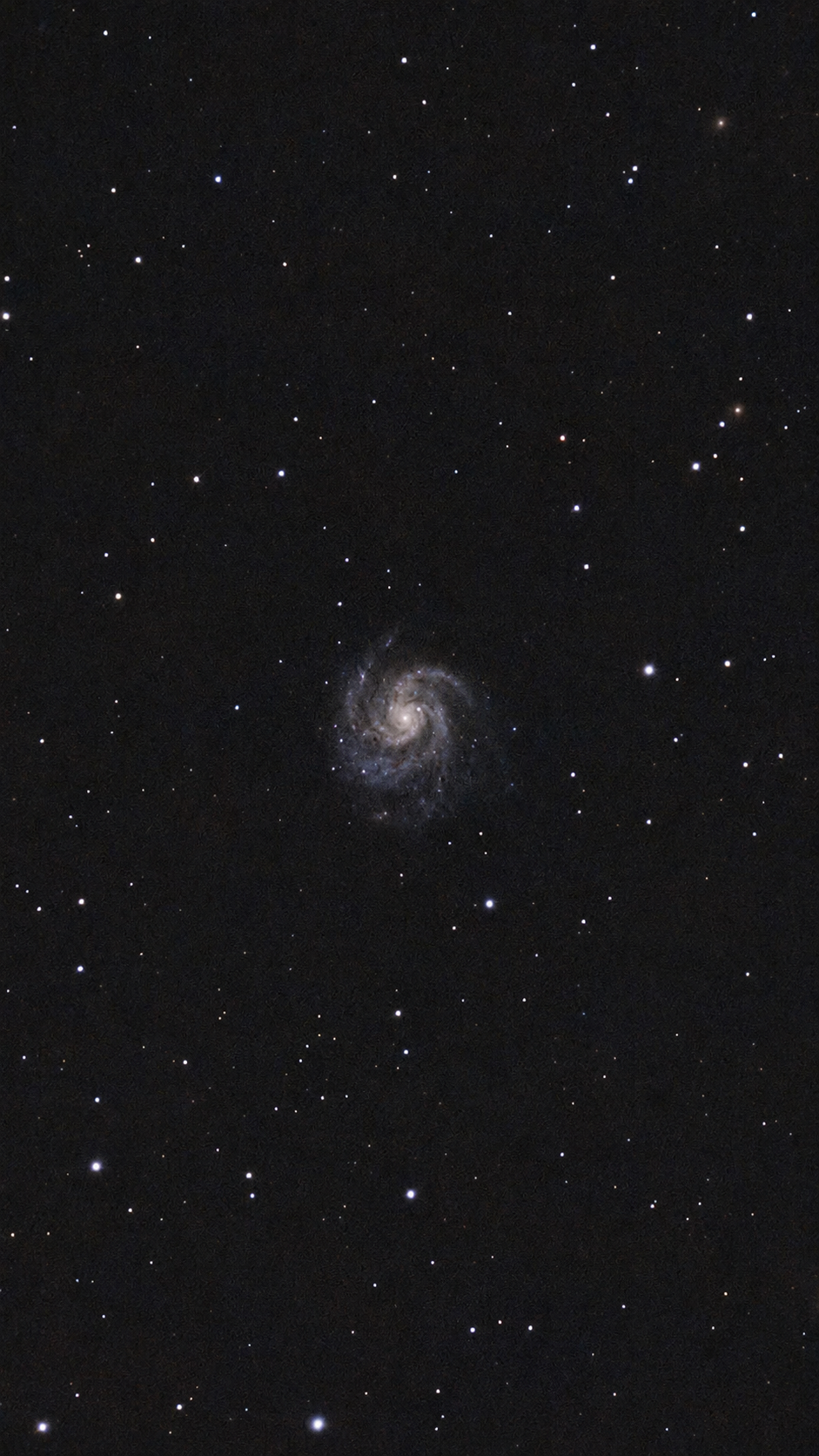
The pinwheel galaxy after a 22-minute exposure with the S30 Pro (left), with enhancement using the Seestar app (center), and after further enhancement beyond the app (right).
I now had far and away the best-ever picture of the pinwheel galaxy. And it amazed me to consider that I could get such an impressive image, of a galaxy more than 20 light years distant, in so little time, with such a little telescope.
My verdict: if your goal is to take basic astrophotographs with minimal hassle, I’m not sure you can do better than the S30 Pro. It’s a breeze to use, it fits in the palm of the hand, and it sets up in less than a minute.
Pairing a little smart telescope like the S30 with a traditional telescope is easy, as the S30 fits in a bag that’s actually smaller than my eyepiece case. I can step outside carrying both the Takahashi and the Seestar at the same time. I can set up both within minutes.
And by combining new and old ways of observing the universe, I can admire just about every object in the night sky.
If only those clouds would cooperate!